




The Truth About Whitening Strip Safety (and a Peroxide-Free Alternative That Works)
Whether teeth whitening strips are safe comes down to one thing: what is in the gel. Most strips sold in UK shops contain hydrogen peroxide at concentrations low enough to meet legal thresholds, but that does not mean every strip on the market is harmless.
The risks are real but specific. This article covers what peroxide does to enamel, which side effects come with at-home teeth whitening strips, what UK law says about concentrations, and how a peroxide-free ingredient called PAP is changing the picture.
Are Teeth Whitening Strips Actually Safe?
The short answer is conditional. Strips containing less than 0.1% hydrogen peroxide are legal for over-the-counter sale in the UK under EU Cosmetics Regulation No 1223/2009, and at that concentration they are unlikely to cause lasting enamel damage when used as directed. But 0.1% is a weak dose. Whitening results at that level are mild and slow, which is why so many shoppers turn to higher-concentration strips imported from the US or sold through Amazon and social media ads.
Those products frequently exceed UK legal limits. The risk of enamel erosion and gum irritation rises sharply once hydrogen peroxide passes 6%.
Strips with 10% or more can penetrate enamel and damage soft tissue.
How Hydrogen Peroxide Affects Your Teeth and Gums
Hydrogen peroxide is a bleaching agent. When applied to teeth for 20 to 30 minutes it does not just act on the surface. The molecule is small enough to pass through enamel and reach the dentin layer underneath.
Dentin sits directly above the tooth nerve. Once peroxide reaches it, the oxidation process breaks apart stain molecules but also temporarily dehydrates the tooth structure. That dehydration is what triggers the sharp tooth sensitivity many people feel after using whitening strips. Repeated exposure at high concentrations can weaken enamel over time, and a 2004 study in the Journal of Dentistry found that prolonged contact with high-concentration peroxide reduced enamel microhardness.
Carbamide peroxide works differently. It breaks down into hydrogen peroxide and urea, releasing the bleaching agent more slowly. A 10% carbamide peroxide gel yields roughly 3.5% hydrogen peroxide, which is why many dentist-supervised whitening kits use carbamide rather than hydrogen peroxide directly.
Common Side Effects of Peroxide Strips and How to Manage Them
We have just covered enamel damage in the section above. The other side effects are shorter-lived but still worth knowing.
Most people who try peroxide whitening strips notice tooth sensitivity first. It typically appears within the first few uses and fades within 48 hours of stopping treatment.
If it does not fade, stop and speak to a dentist.
Gum irritation is the second most common complaint. Strips are cut to a standard width, and on smaller mouths the edges press into soft tissue. Trimming them with scissors so the strip sits on teeth only reduces this significantly. If you notice why teeth become suddenly sensitive after starting a whitening routine, strip contact with gum tissue is often the cause.
What Is the Alternative to Hydrogen Peroxide?
Most whitening strips rely on peroxide. Not all of them need to.
PAP (Phthalimidoperoxycaproic acid) has gained ground across UK and European markets as a peroxide-free whitening agent that sidesteps enamel and sensitivity risks entirely.
The chemistry works through epoxidation rather than the free-radical oxidation hydrogen peroxide relies on. That structural difference matters: hydrogen peroxide penetrates through enamel to reach dentin, while PAP breaks apart stain compounds on the enamel surface without passing through it.
A 2023 in-vitro study compared the two head-to-head and found that PAP whitened effectively while producing significantly less cytotoxicity. Because PAP does not reach the dentin layer, the nerve irritation and dehydration that causes sensitivity with peroxide strips does not apply.
Textile and paper industries have used PAP for decades, but its oral care application is newer. It is now the active ingredient in a growing number of peroxide-free whitening strips and pens.
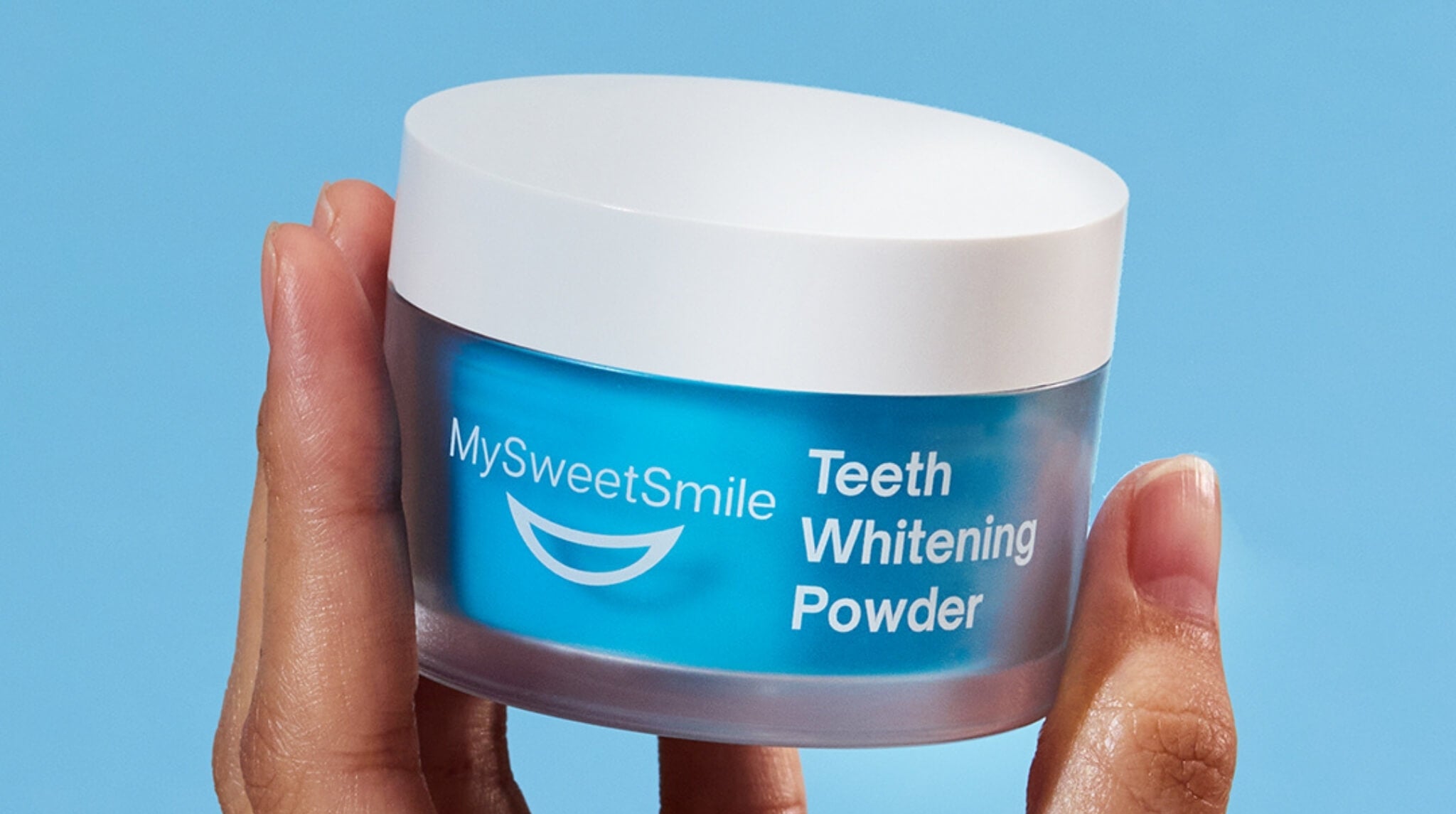
MySweetSmile's teeth whitening powder uses a different approach — Calcium Carbonate polishes away surface stains while Pentasodium Triphosphate prevents new ones forming, but the brand's strip range is built around PAP.
MySweetSmile PAP Whitening Strips: Peroxide-Free with Visible Results
By this point you know what peroxide does to enamel and dentin, and you know that PAP whitens without that penetration. MySweetSmile's PAP Teeth Whitening Strips use an advanced PAP formula. No hydrogen peroxide. No carbamide peroxide. The result is visibly whiter teeth without the sensitivity or enamel risk that comes with peroxide-based whitening strips.

Each pack contains 42 strips for three separate 7-day whitening cycles. Peel the backing and press the smaller strip to your bottom teeth and the larger one to the top. Leave them on for 30 minutes, then peel off and rinse. The strips are for adults aged 18 and over.
Backed by over a million customers worldwide and 7,500+ Trustpilot reviews at 4.4/5, rated Excellent. They hold a Dermatest 5-Star Seal of Approval, a clinical certification that fewer than 5% of tested products receive.
At £24.99 per pack — or just £0.79 per treatment with our Buy 2 Get 1 Free offer, three packs for £49.98 across 63 treatments. The remaining strips in each pack give you two more full cycles or can be used for touch-ups.
If sensitivity from peroxide strips has put you off at-home teeth whitening entirely, these are worth a look. Pick up the MySweetSmile PAP Teeth Whitening Strips here.
UK Regulations on Whitening Strips You Should Know
The UK follows EU cosmetics regulations for whitening products. Any teeth whitening strip or gel sold over the counter must contain less than 0.1% hydrogen peroxide. Between 0.1% and 6%, the product can only be applied under the supervision of a dental professional, and anything above 6% is illegal for cosmetic use entirely.
The General Dental Council classifies whitening as a dental procedure at concentrations above 0.1%, which means a beautician or salon offering high-strength strips is breaking the law.
Many products shipped from the US contain 10% or higher hydrogen peroxide. Legal there. Not here.
PAP-based whitening strips fall outside hydrogen peroxide restrictions entirely because PAP is a different chemical compound, giving peroxide-free strips a regulatory clarity that peroxide products often lack at higher strengths.
How to Read the Ingredients on Your Whitening Strips
Flip the box over before you buy.
The ingredients list tells you exactly what type of whitening agent is inside and whether the strip carries any enamel risk. Look for "hydrogen peroxide" or "carbamide peroxide" on the label. If either appears, the product is peroxide-based and you should check whether a concentration percentage is stated. UK-compliant over-the-counter whitening strips should show a figure below 0.1% for hydrogen peroxide. If the label shows "Phthalimidoperoxycaproic acid" or "PAP," the product is peroxide-free.
One ingredient to avoid entirely is chlorine dioxide. It is an industrial bleaching agent that can erode enamel aggressively, and a 2019 BDJ investigation into over-the-counter whitening products flagged it as a particular risk. If you spot it on a label, put the box back.
Tips for Safe Whitening at Home
Whatever whitening strips you choose, a few habits reduce risk and protect your enamel:
-
Read the instructions fully before your first use. Wear time varies between peroxide and peroxide-free strips, and exceeding it does not speed up results.
-
Avoid coffee and tea for at least 30 minutes after removing strips. The same goes for red wine and dark berries. Enamel is more porous immediately after whitening.
-
Use a fluoride toothpaste between whitening sessions to support enamel remineralisation.
-
If tooth sensitivity lasts beyond 48 hours after stopping use, book a check-up with your dentist.