




How to Remove Stains From Teeth Without Damaging Enamel
Trying to remove stains from teeth usually leads straight to peroxide-based whitening products. Hydrogen peroxide and carbamide peroxide bleach discolouration by stripping mineral content from the enamel surface.
High-concentration peroxide thins enamel and makes it more porous with each use.
Enamel does not regenerate. Once it weakens, teeth react more sharply to hot and cold because less mineral sits between the nerve and the outside world. Roughened enamel absorbs new pigments faster, so stains return sooner after every treatment.
Choosing the wrong method makes the original problem worse.
Peroxide is not the only way to break down tooth stains. Enamel-safe removal methods exist for every stain type, and the right one depends on what is actually causing the discolouration.
Match Your Stain Type to the Right Removal Method
What stained your teeth determines how to get rid of the stains on them. A surface film from this morning's tea needs a different approach than deep discolouration from years of medication. The six most common types are below, each with a specific product recommendation matched to the stain.
Every product mentioned in this section is peroxide-free and comes from MySweetSmile's whitening range, which holds a Dermatest 5-Star Seal of Approval and has won back-to-back IndyBest Best Teeth Whitening awards in 2023 and 2024.
Tea Stains
If you drink tea every day, your teeth are absorbing tannins with every cup. Tannins are the compounds that give tea its bitter, drying taste.
Those tannins bind to tooth enamel on contact and build into a yellow-brown film over weeks and months of daily exposure.
Tea stains are extrinsic, meaning they sit on the enamel surface rather than inside the tooth. That is good news for removal. Because the discolouration has not penetrated deeper than the outer layer, a mildly abrasive whitening treatment can physically break up the tannin deposits and lift them off. Most people see a noticeable difference within one to two weeks of consistent daily use.
Best Removal Method: Daily Whitening Powder

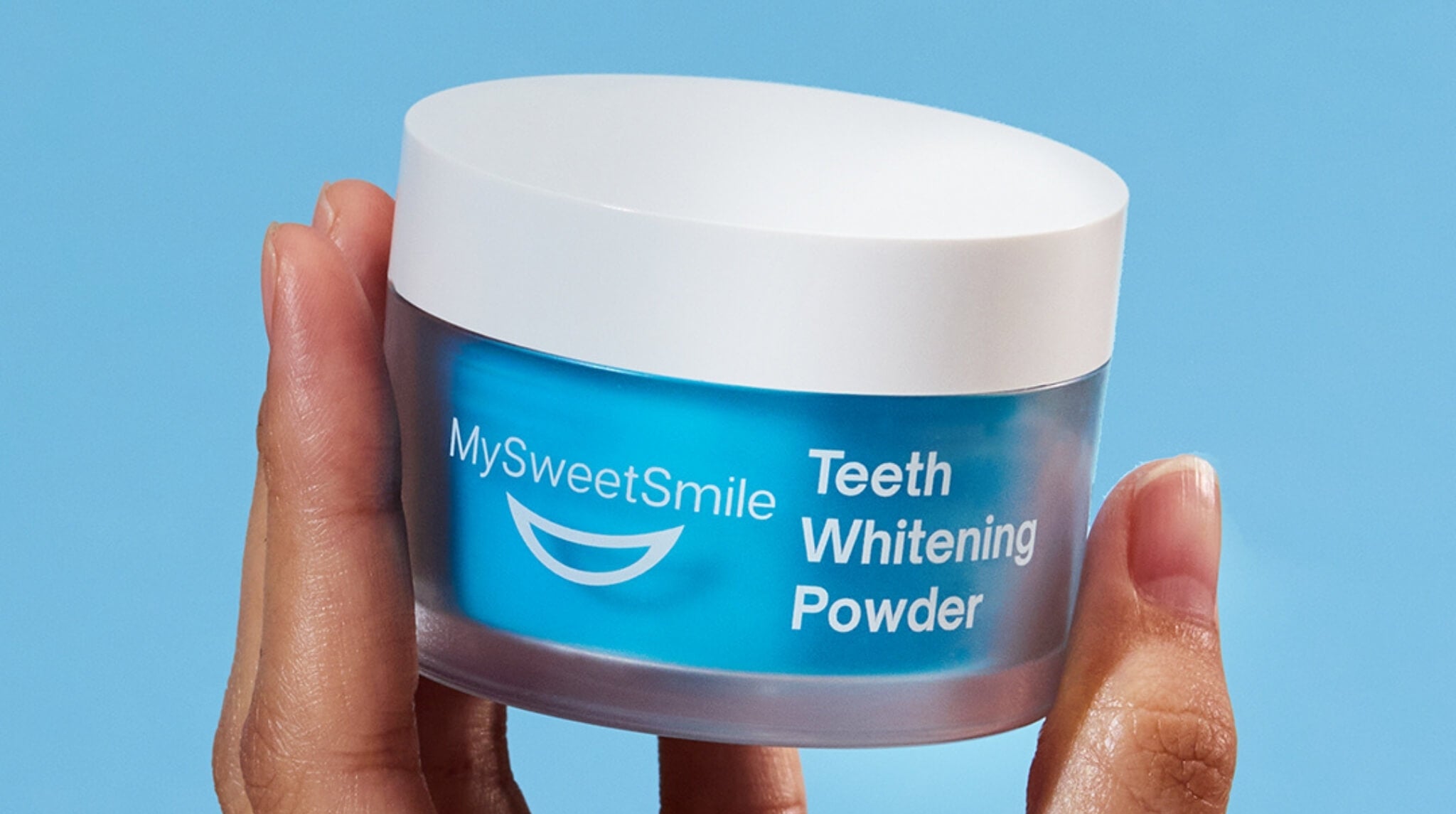
MySweetSmile's Teeth Whitening Powder is a pre-brushing treatment that fits into your existing morning routine. Dampen your toothbrush and dip it into the powder. Brush for two minutes, then follow with your normal toothpaste.
Calcium Carbonate polishes away surface stains by breaking the bonds holding tannin deposits to enamel. Pentasodium Triphosphate prevents new stains from forming. A third ingredient, Strontium Chloride, shields nerve endings so there is no sensitivity during or after use
In an October 2024 clinical study, 65% of users noticed whiter teeth within 14 days. Another 35% saw results within seven days. One jar lasts up to six months at twice-weekly maintenance. With our Buy 2 Get 1 Free offer, three jars come to £49.98 — just 32p per use.
Get the Teeth Whitening Powder on the MySweetSmile website.
Coffee Stains
Coffee contains chromogens, which are pigment-heavy molecules that cling to tooth enamel and darken it over time. What makes coffee staining harder to shift than tea is the drink's natural acidity.
Acid softens the enamel surface temporarily after each sip, and chromogens bond more deeply to softened enamel than they would to a hard, intact surface.
That is why coffee stains tend to look darker and feel more sjarborn than tea stains even though both are extrinsic.
Front teeth catch the worst of it because they contact the liquid first. Abrasive and peroxide-free whitening methods that clear tea stains work here too, though heavier coffee staining sometimes needs PAP whitening strips. PAP is a chemical whitening agent that breaks down stain molecules rather than just polishing the surface, which gives it more reach on deeper extrinsic deposits.
Best Removal Method: Whitening Powder, or PAP Strips for Heavier Staining

MySweetSmile's Teeth Whitening Powder works on most coffee discolouration within two weeks. For front teeth with heavier buildup that the powder has not fully cleared, MySweetSmile's PAP Whitening Strips provide a stronger treatment. Each pack has 42 strips for three full 7-day whitening cycles at 30 minutes per session, and PAP breaks down stain molecules without the sensitivity that hydrogen peroxide causes.
Red Wine Stains
Red wine stains teeth through a combination of three factors working at once. Anthocyanins are the pigments that give red wine its deep colour. Tannins make those pigments stick to enamel. And the wine's acidity softens the surface so the stain sets faster than it would from a non-acidic drink.
Red wine can leave a purple-grey tint after a single evening. Rinsing with water straight after drinking washes away loose pigment before it bonds fully.
Wine stains are extrinsic, so the same removal methods that work on tea and coffee will clear what remains.
Best Removal Method: Whitening Powder the Morning After

Use the Teeth Whitening Powder as your pre-brushing step the morning after drinking red wine. Calcium Carbonate will polish away the anthocyanin deposits before they set permanently, while Pentasodium Triphosphate prevents new stains from bonding.
Nicotine and Tobacco Stains
Cigarette smoke deposits tar directly onto the tooth surface. Tar is a sticky residue that builds up along the gumline and between teeth where bristles miss, creating a yellow-brown discolouration that is significantly harder to shift than drink-related staining.
Tar stains resist lighter treatments because nicotine and tar compounds bond more deeply within the enamel's porous structure than food or drink stains. A surface-level abrasive powder may only partially clear them. PAP whitening strips hold a whitening agent against the teeth for 30 minutes at a time, which gives the active ingredient enough sustained contact to break down those deeper deposits.
Existing stains will not fade on their own. Quitting prevents new tar from building up, but the discolouration already there needs active treatment.
Best Removal Method: PAP Whitening Strips

MySweetSmile's PAP Whitening Strips are the strongest at-home option for nicotine staining. Phthalimidoperoxycaproic Acid breaks down tar deposits that sit below the enamel surface without the enamel thinning or sensitivity that peroxide-based strips cause. At £24.99 for three separate 7-day treatment cycles, that is three rounds of whitening from a single pack. Trusted by over a million customers and rated Excellent on Trustpilot — 4.4/5 from 7,500+ reviews.
Try the PAP Whitening Strips here.
For staining concentrated between teeth or along the gumline where strips cannot sit flush, MySweetSmile's Precision Teeth Whitening Pen has a fine brush tip that applies PAP and Hydroxyapatite directly to those specific areas. Ten minutes per application, up to 30 uses per pen, £19.99. See the whitening pen for on-the-go touch-ups here.
Deep Discolouration (Intrinsic Stains)
Intrinsic stains sit inside the tooth, in the dentin layer beneath the enamel. Tetracycline antibiotics taken during childhood and excessive fluoride exposure are common causes. Physical trauma to a single tooth can also darken it from the inside.
These stains are different from surface staining because no amount of polishing or abrasive treatment can reach the dentin. Discolouration sits behind the enamel, not on top of it. PAP whitening strips work here because PAP works on and within the enamel's outer pores without causing the structural damage hydrogen peroxide does.
Results come slower than with surface stain removal. Multiple 7-day cycles may be needed before visible change appears. Severe cases where the discolouration is very dark or covers multiple teeth may need professional treatment from a dentist.
Best Removal Method: PAP Whitening Strips for Three to Six Weeks
MySweetSmile's PAP Whitening Strips address intrinsic discolouration across repeated 7-day cycles. Each pack contains enough strips for three full cycles, giving deeper staining the extended treatment time it needs..
Age-Related Yellowing
Enamel thins naturally with age through decades of chewing, brushing, and acid exposure. As the enamel layer gets thinner, the dentin underneath starts to show through more visibly.
Dentin is naturally yellow, so teeth gradually look darker even if surface hygiene is excellent.
This is not caused by staining in the traditional sense. It is a structural change in the tooth itself. A combination approach works best: daily abrasive whitening lifts any surface-level staining on top of the thinned enamel, and periodic PAP strips address the dentin discolouration showing through from beneath.
Best Removal Method: Whitening Powder Combined With PAP Strips

Use the Teeth Whitening Powder daily for the first 14 days to clear surface stains, then switch to twice-weekly maintenance. Run a 7-day cycle of PAP Whitening Strips alongside or afterwards to address the deeper yellowing from dentin showing through. The two products work on different layers of the tooth, which is why the combination gives a more visible result than either one alone.
Home Remedies: What the Evidence Actually Says
Baking soda is a mild abrasive that can help with surface-level teeth stain removal when used occasionally. A 2017 JADA review confirmed that baking soda dentifrices are effective for stain removal and safe for enamel.
Baking soda is not a substitute for a dedicated whitening product, but it will not cause harm at normal brushing frequency.
Activated charcoal is a different story. A 2019 British Dental Journal review found insufficient evidence for charcoal whitening claims and flagged enamel abrasion as a real risk with regular use. Most charcoal toothpastes also lack fluoride, removing a basic layer of cavity protection.
Coconut oil pulling has no clinical evidence behind it, and neither do fruit peel or strawberry pulp methods. Acid from fruit-based remedies can erode enamel. If a remedy has no research behind it, the risk is not worth the experiment.
How to Stop Stains Coming Back
The single easiest habit is rinsing your mouth with water straight after drinking tea, coffee, or red wine. This washes away tannins and chromogens before they bond to enamel.
Other steps that reduce new staining over time:
-
Drinking iced coffee and tea through a straw so the liquid bypasses front teeth
-
Adding milk to tea, which reduces staining potential because casein binds to tannins before they reach enamel
-
Brushing twice daily with a whitening toothpaste
-
Booking a professional hygienist cleaning every six months to remove hardened tartar that traps pigment
When to See a Dentist About Tooth Staining
Most extrinsic staining responds well to at-home treatment within two to four weeks. If discolouration appears suddenly or shows up as brown or grey spots rather than general yellowing, a dentist should assess it first.
Staining that followed a course of medication is often intrinsic and may need professional evaluation. A dentist can confirm the cause. At-home treatment that has not produced any visible change after four to six weeks of consistent use also warrants a professional opinion. Some deeper discolouration needs in-office procedures like bonding or veneers that whitening products cannot replicate.