




How to Whiten Teeth Safely (Without Damaging Your Enamel)
If you want to know how to whiten teeth without risking your enamel or spending hundreds at the dentist, this article covers every major method with a clear verdict on safety and effectiveness. Each option below tells you what works and what to avoid so you can pick one and start tonight.
Why Do Teeth Turn Yellow? (The Causes Most People Miss)
Tooth discolouration falls into two categories, and knowing the difference saves you from wasting time on the wrong method.
Extrinsic Stains (Surface Discolouration from Food and Drink)
Coffee and tea deposit coloured compounds onto enamel. Red wine, tobacco, and dark-pigmented foods do the same. These extrinsic stains sit on the outer surface and are the type at-home whitening can remove.
Brushing twice daily slows the build-up but won't fully prevent it once staining compounds bond to the pellicle film on your teeth.
Intrinsic Stains (Why Teeth Yellow with Age)
Beneath your enamel sits dentin, a naturally yellow tissue. As enamel wears thinner with age, more dentin shows through, giving teeth a warmer tone year on year.
Fluorosis during childhood or tetracycline antibiotics can also discolour teeth from within. No at-home whitening product removes intrinsic stains; those typically need veneers or dental bonding.
PAP Whitening Products (The Peroxide-Free Option)
PAP (Phthalimidoperoxycaproic Acid) breaks down stain molecules through epoxidation without producing free radicals. It is not a new ingredient, but most people have never heard of it.
A 2023 in-vitro study in Dentistry Journal compared PAP and hydrogen peroxide head-to-head. Both produced visible whitening, though hydrogen peroxide scored higher on raw shade change. The difference that matters for home use: hydrogen peroxide reduced enamel microhardness. PAP did not, making it the safer option for repeated at-home use.
MySweetSmile's PAP whitening strips use this ingredient in a peroxide-free formula applied for 30 minutes per session over a 7-day cycle.
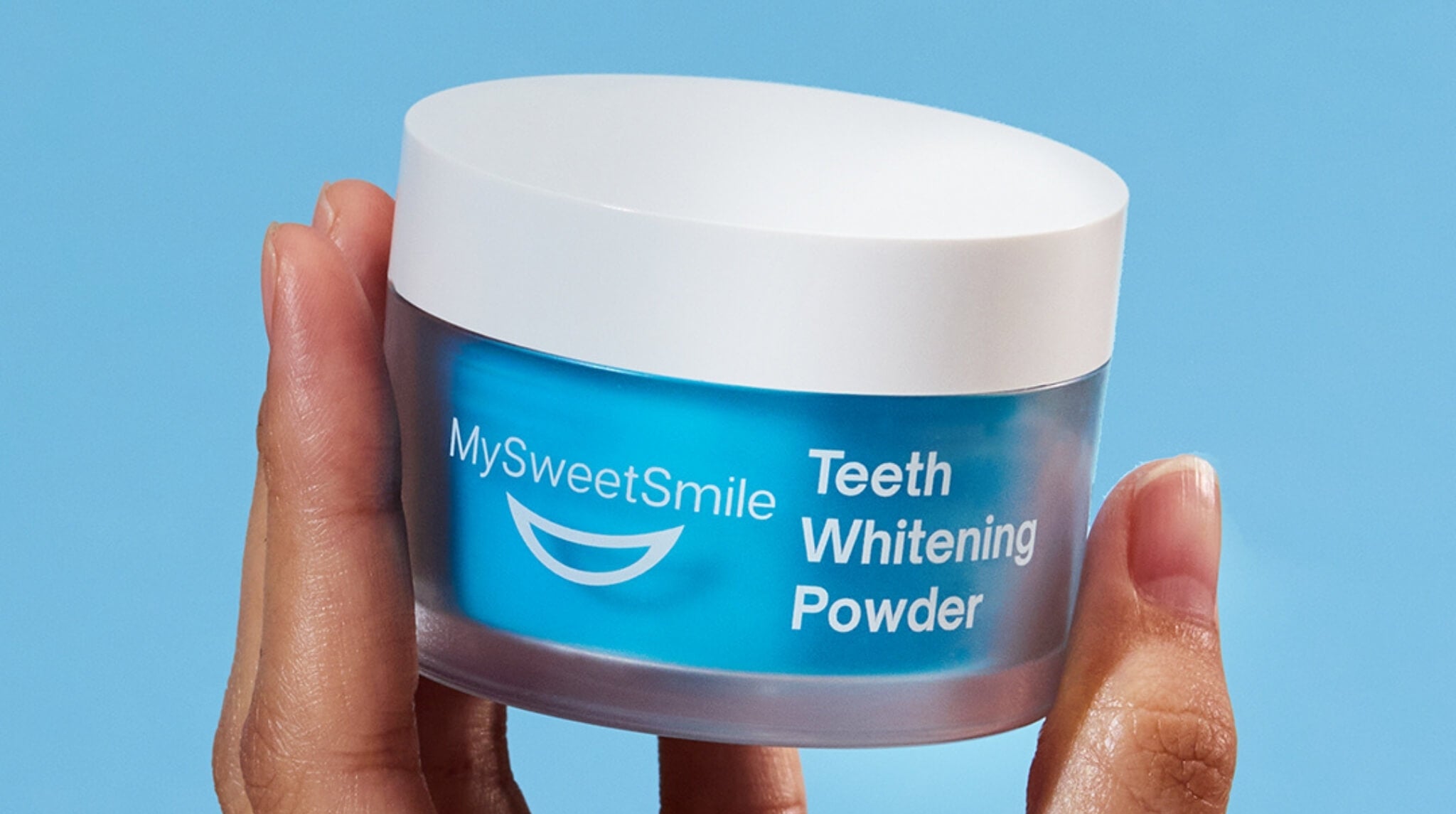
MySweetSmile Teeth Whitening Powder: A Safer At-Home Option

For daily coffee and tea drinkers, you can get noticeably whiter teeth at home without sensitivity and without peroxide. MySweetSmile's Teeth Whitening Powder does exactly that with three active ingredients.
Calcium Carbonate polishes away surface stains. Pentasodium Triphosphate prevents new stains from forming. Strontium Chloride shields nerve endings as a protective barrier, which is why sensitivity is not an issue.
Dip a damp toothbrush into the powder, brush for two minutes, then rinse and follow with your normal toothpaste. Use daily for the first 14 days, then twice weekly. One jar lasts up to six months. In an October 2024 clinical study, 65% within 14 days noticed improvements and 35% saw results in just 7 days.
A single professional whitening session costs between £300 and £600 and lasts about a year. This powder costs £24.99 and lasts six months, with clinical results to match.
Try the Teeth Whitening Powder here.
Baking Soda for Teeth Whitening
As a mild abrasive, sodium bicarbonate polishes surface stains off enamel without the chemical reaction that peroxide relies on. A 2017 JADA review concluded that baking soda dentifrices are effective for stain removal with lower abrasivity than many commercial alternatives.
The same 2023 Dentistry Journal study ranked it second for colour change at 7.5 on the shade scale, a visible improvement, with no toxicity concerns.
Limit direct use to two or three times per week. It has no fluoride. That means it should sit alongside your regular toothpaste, not replace it.
Hydrogen Peroxide (What Works and What to Watch For)
Hydrogen peroxide is the bleaching agent behind most professional whitening. The 2023 Dentistry Journal study showed it produced the strongest colour change of any tested ingredient at 9.6 on the shade scale, but it also caused mild enamel erosion between the prisms that make up tooth structure. In plain terms, it whitens well but can weaken your teeth in the process.
For home use, stick to diluted solutions at 1.5% or lower as a brief mouth rinse.
Under UK cosmetics regulations, over-the-counter products are capped at 0.1% hydrogen peroxide, which is too low to produce a visible whitening effect on its own. Concentrations up to 6% can only be supplied by a dental professional. Anything stronger risks enamel damage and persistent sensitivity.
Strawberries, Oil Pulling, and Other Home Remedies (Do They Actually Work?)
Strawberries and Malic Acid
Strawberries are a mild supplement at best, not a primary whitening method. Malic acid can lighten surface stains temporarily, but the effect washes away after brushing.
Oil Pulling
Swirling coconut or sesame oil for 15 to 20 minutes is an ancient Ayurvedic practice. No clinical trial supports it, so there is no evidence-based reason to expect whiter teeth from the practice. Safe to try, but it should not replace brushing with fluoride toothpaste.
Dietary Changes (Prevention, Not Whitening)
Cutting back on coffee, tea, and red wine slows new staining but will not reverse discolouration you already have. Crunchy vegetables and tart fruits stimulate saliva and help clear stain-causing particles, so treat diet as what you do alongside whitening rather than instead of it.
Methods to Avoid (And Why They Can Damage Your Teeth)
Lemon Juice
Citric acid strips minerals from enamel. Any short-term brightness comes at the cost of permanent erosion and higher cavity risk. Avoid it.
Activated Charcoal
Charcoal powders and toothpastes are highly abrasive with no peer-reviewed evidence for whitening. They scratch enamel and leave micro-grooves behind. Those grooves trap more stain over time, meaning charcoal can leave your teeth looking worse than before you started.
The American Dental Association has found insufficient evidence that charcoal products provide measurable whitening benefit.
Salt Scrubbing
Rubbing salt directly on teeth can strip a thin enamel layer along with stains, increasing sensitivity and weakening resistance to cavities. Diluted saltwater rinses for gum health are a different practice entirely. If sensitivity is already a concern, read more about why teeth become sensitive.
Building a Teeth Whitening Routine That Lasts
One-off whitening will not keep your teeth bright. Stains return with every cup of coffee and glass of wine, which is why a structured routine works better than any single treatment.
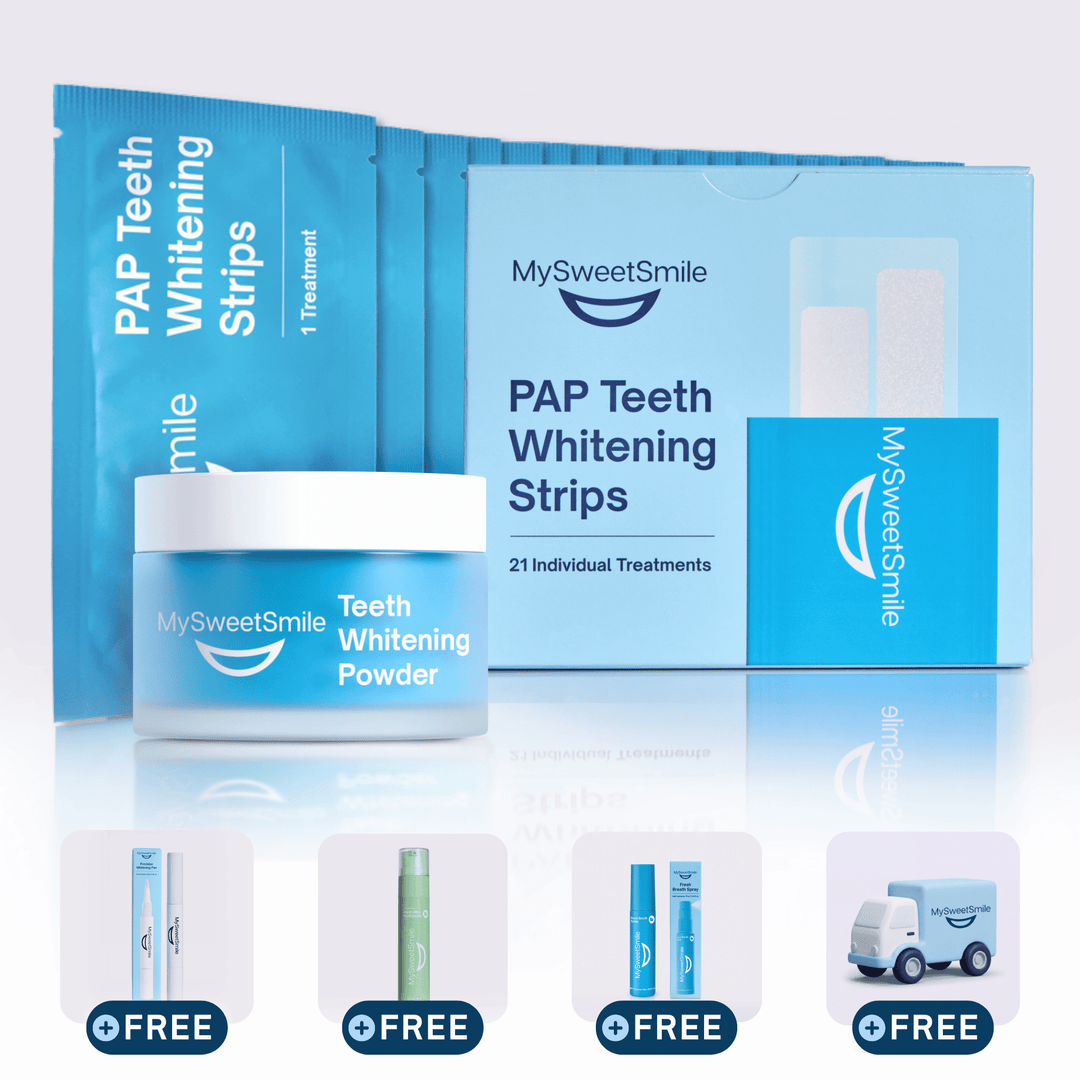
The MySweetSmile Pro Teeth Whitening Kit puts three Dermatest-certified products into one system. The Teeth Whitening Powder lifts surface stains as a pre-brushing step. For deeper discolouration, the PAP Whitening Strips work over a 7-day cycle. The Fresh Breath Spray restores pH balance and uses Xylitol to stop bacteria adhering to teeth between meals.
Bought separately, the Powder, Strips, and Spray cost £72.97. The kit bundles all three for £39.99, saving you £32.98. That is a complete whitening routine for less than the cost of a single dental check-up. Pick up the Pro Teeth Whitening Kit here.
Frequently Asked Questions
Can you whiten teeth overnight?
No product whitens teeth in one night. You can start a routine tonight, though. PAP-based strips show visible changes within a week, and whitening powders within 14 days.
Does whitening damage enamel?
Peroxide-free methods like PAP and baking soda do not damage enamel when used correctly. High-concentration hydrogen peroxide can cause erosion, which is why UK regulations restrict it.
How long do results last?
That depends on diet and maintenance. Without regular upkeep, coffee and tea stains return within weeks. A twice-weekly whitening powder routine keeps results consistent.
Is teeth whitening safe during pregnancy?
Consult your dentist before whitening during pregnancy. Most dental professionals recommend postponing cosmetic treatments until after delivery.
Why are my canine teeth more yellow than others?
Canines have the thickest dentin layer of any tooth. More dentin means a stronger yellow tone, even when surrounding teeth look white.
This is normal and canines are usually the last teeth to respond to whitening. For more on how tooth structure affects oral health, read about tooth decay and cavities.